


Composite Bonding in Hounslow
Composite bonding uses tooth-coloured resin to repair or reshape selected teeth. It may be considered for small chips, worn edges, limited gaps, uneven tooth shape or localised discolouration. A clinical examination is needed because suitability depends on your tooth and gum health, bite, habits such as grinding, and the amount of change requested.
What is composite bonding?
Composite resin is applied directly to the tooth, carefully shaped and polished to improve its form or appearance. It is often an additive and minimally invasive treatment, but it should not be described as completely non-invasive or fully reversible. Some teeth may need surface preparation, adjustment or local anaesthetic.
What can composite bonding be used for?
- Repairing small chips or worn tooth edges
- Improving the shape or symmetry of selected teeth
- Closing or reducing small spaces between teeth
- Masking certain localised marks or discolouration
- Replacing or repairing existing composite where clinically appropriate
Composite bonding does not correct every cosmetic or dental concern. Your dentist will explain what is realistically achievable before treatment.
Who may be suitable?
Composite bonding may be suitable when the teeth and gums are healthy, the bite is stable and the requested change can be achieved safely with resin. Photographs, examination findings and, when needed, X-rays or a trial design may be used during planning.
Active decay, gum disease, uncontrolled tooth grinding, significant bite problems or extensive tooth damage may need to be managed first. In some cases, another treatment or no treatment may be the safer choice.
Benefits and limitations
Possible benefits
- Tooth-coloured material can be shaped directly on the tooth.
- Preparation may be limited compared with some indirect restorations.
- Small chips or defects can often be repaired.
- Treatment can be planned for one tooth or several teeth.
Important limitations
- Composite can stain, lose surface gloss or wear over time.
- It may chip, fracture or detach, particularly with heavy biting forces or grinding.
- The result depends on the starting tooth colour, shape, position and bite.
- Maintenance, polishing, repair or replacement may be required.
- No cosmetic result or treatment lifespan can be guaranteed.
What happens during treatment?
- Assessment: We discuss your concerns, dental health, expectations and relevant treatment options.
- Planning and consent: Your dentist explains the proposed result, limitations, material risks, alternatives, costs and likely maintenance.
- Shade selection and preparation: A resin shade is selected. The tooth is cleaned and prepared as clinically required.
- Bonding and shaping: Composite resin is applied in layers, hardened with a curing light and shaped.
- Finishing: The restoration is polished and your bite is checked. Follow-up may be recommended.
Risks and maintenance
Possible issues include staining, loss of gloss, wear, chipping, fracture, debonding, sensitivity, a bulky feeling, bite changes and decay around restoration margins. These risks vary between patients and should be discussed as part of informed consent.
Good oral hygiene, regular dental examinations and hygiene appointments help us monitor the teeth and restorations. Avoid biting hard objects such as pens, ice or fingernails. If you grind or clench your teeth, your dentist may discuss a protective appliance. Contact us if the bonding feels rough, loose, painful or affects your bite.
How long does composite bonding last?
There is no single guaranteed lifespan. Longevity depends on the tooth, bite, number and size of restorations, diet, oral hygiene, grinding habits and maintenance. Composite bonding may need periodic polishing, repair or replacement.
Alternatives to composite bonding
Depending on your needs, alternatives may include no treatment, tooth whitening, orthodontic treatment, replacement fillings or, where clinically appropriate, porcelain restorations. Each option has different benefits, limitations, costs and effects on natural tooth tissue. Your dentist will help you compare suitable choices.
Composite bonding costs
Fees depend on the number of teeth, the complexity of the treatment and any dental care needed beforehand. See our current dental price guide. After assessment, we will explain the proposed care and provide a personalised written treatment plan before you decide whether to proceed.
Frequently asked questions
Does composite bonding require drilling?
Not always. It is often minimally invasive, but some cases require surface preparation or adjustment. Your dentist will explain what is needed for each tooth before treatment.
Is composite bonding painful?
Many patients need little or no anaesthetic, but this varies with the tooth and the work required. Please tell us if you are anxious or sensitive so that we can discuss comfort options.
Can composite bonding whiten my teeth?
Composite changes the appearance of selected areas but does not whiten natural tooth tissue. If whitening is appropriate, it is usually planned before the final composite shade is selected.
Can composite bonding be removed?
Removal or replacement may affect the underlying enamel, so composite bonding should not be presented as fully reversible. Your dentist will explain the likely implications for your individual teeth.
Book a composite bonding assessment
If you are considering composite bonding in Hounslow, contact DentEuropa to arrange an assessment. We will examine your teeth, discuss your priorities and explain suitable options without promising a particular result before clinical evaluation.
Important: This page provides general information and does not replace an individual dental examination, diagnosis or treatment plan.
Page updated: 19 August 2026.
Trusted information: GDC composite bonding insights · GDC consent guidance · DentEuropa CQC record
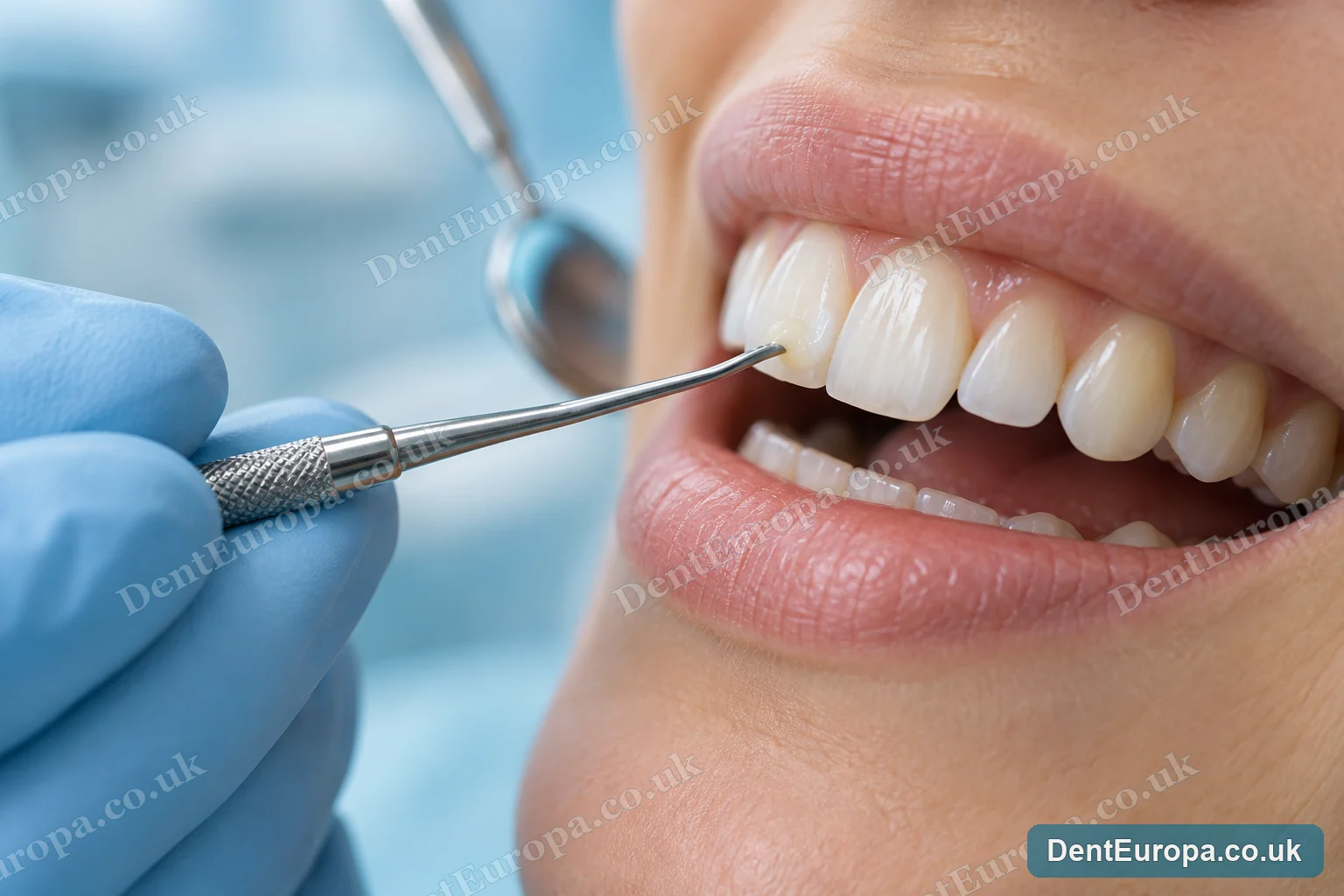
Composite bonding in Hounslow
Composite bonding uses tooth-coloured resin to repair small chips, close selected gaps or improve the shape of a tooth. It is bonded directly to the tooth and usually requires little or no removal of healthy enamel, although suitability depends on your bite, tooth position and oral health.
What can composite bonding improve?
It may be suitable for minor shape, edge, spacing or colour concerns. Larger defects, heavily restored teeth or some bite problems may need a different option such as orthodontic treatment, a veneer or a crown.
Will composite bonding need maintenance?
Composite resin can stain, chip or wear over time. Avoiding nail biting and using teeth to open objects, together with routine dental reviews, can help protect the result. The material can often be polished or repaired, but replacement may eventually be required.
A consultation is needed to confirm suitability, expected maintenance and alternatives.

