TMJ and Jaw Joint Pain Treatment in Hounslow
Jaw joint pain and TMD in Hounslow
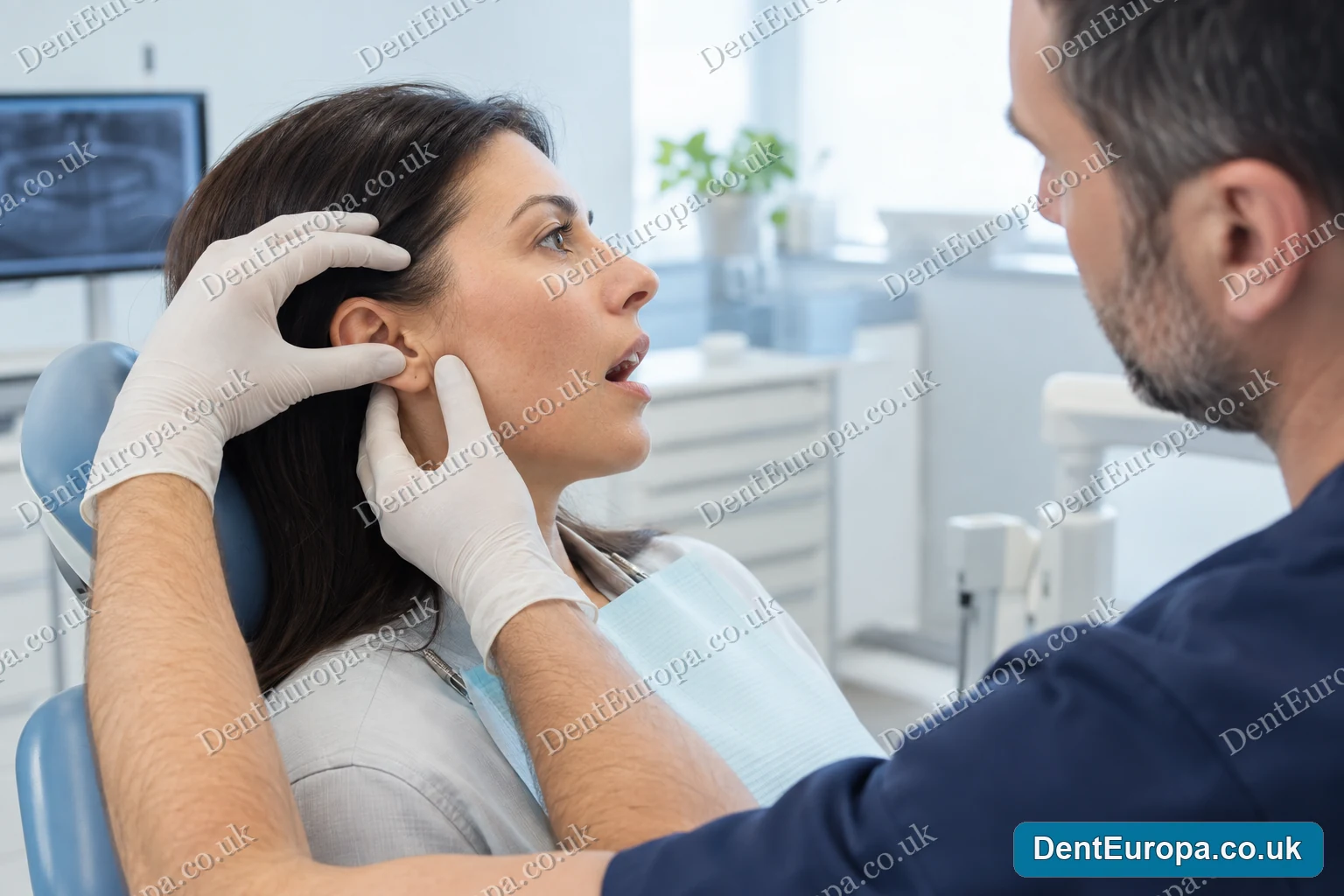
Temporomandibular disorder (TMD) can cause pain around the jaw, ear or temple, clicking, limited opening or jaw locking. Many cases improve with conservative care, but similar symptoms can have different causes. Assessment may include the jaw joints, muscles, bite, teeth and relevant medical history.
Can teeth grinding contribute to jaw pain?
Clenching or grinding can be associated with jaw discomfort, headaches and tooth wear. A dentist may discuss tooth protection, while stress, sleep or other contributing factors may need wider assessment.
When should I seek urgent help?
Seek urgent medical or dental advice if you cannot eat or drink, the jaw is locked, symptoms follow significant injury, or pain occurs with severe headache, scalp tenderness or vision changes.
- Short-term soft food and avoiding gum or very wide opening may reduce aggravation.
- A splint may protect teeth in selected cases but is not a guaranteed cure for TMD.
- Persistent or complex symptoms may require GP, physiotherapy or specialist input.
Important: This is general information and does not replace a clinical assessment, diagnosis or personalised treatment plan.
Page updated: 19 August 2026. Trusted information: NHS TMD guidance · NHS teeth grinding guidance · DentEuropa CQC record.

The temporomandibular joint (TMJ) is one of the most complex and highly active joints in the human body. It connects the lower jaw (mandible) to the skull and contains a soft cartilage disc positioned between the two bones.
This disc ensures smooth, coordinated movement while protecting the joint structures during opening, closing and chewing.
The joint is supported and stabilised by surrounding ligaments, muscles and a protective capsule, all working together to allow natural jaw movement.
⭐ Why TMJ Disorders Occur
TMJ disorders are multifactorial and may involve dentistry, oral and maxillofacial surgery, prosthodontics, orthodontics and even psychological factors.
A detailed and comprehensive clinical evaluation is therefore essential.
Common causes include:
-
Teeth grinding or clenching (bruxism)
-
Chewing predominantly on one side
-
Long dental procedures requiring prolonged mouth opening
-
Poorly fitting dental restorations or prostheses
-
Stress, anxiety or emotional tension
-
Trauma or injury to the jaw
⭐ Symptoms of TMJ Disorders
A patient may require evaluation and treatment if they experience:
-
Jaw joint pain or tenderness
-
Clicking, popping or grinding noises
-
Limited mouth opening
-
Difficulty chewing
-
Headaches, ear pain or facial discomfort
-
Stiffness or locking of the jaw
⭐ TMJ Treatment Approaches
Early diagnosis and intervention lead to a higher success rate and help prevent progression of symptoms.
Treatment options vary depending on the severity of the condition.
1. Conservative (Non-Surgical) Treatments
These are typically the first and most effective steps:
-
Night Guard / Occlusal Splint
Designed to reduce clenching and grinding, relieve muscle tension and protect the joint. -
Physiotherapy & Jaw Exercises
Helps improve mobility and reduce muscle tightness. -
Medication
Anti-inflammatory drugs or muscle relaxants when needed. -
Stress Management & Behavioural Techniques
Addressing stress-related clenching. -
Adjustment of Bite or Dental Restorations
If an uneven bite or incompatible prosthesis contributes to the problem.
2. Advanced Treatments (When Necessary)
In more severe or persistent cases:
-
Intra-articular injections (such as hyaluronic acid)
-
Arthrocentesis (flushing the joint space)
-
Arthroscopy or open-joint surgery
Rarely required but effective in selected cases.
⭐ Long-Term Management
TMJ disorders often require patience and consistent follow-up.
Most cases respond very well to conservative treatment and do not require surgery.
DentEuropa provides a personalised treatment plan tailored to your specific symptoms, habits and clinical findings, ensuring safe and effective long-term relief.