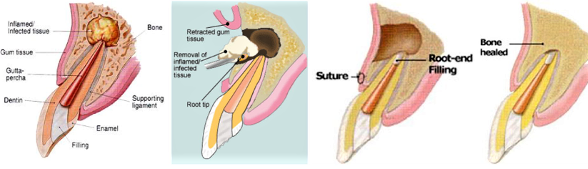
Apical Resection (Apicoectomy)
Apicectomy and root-end surgery in Hounslow
An apicectomy removes the tip of a tooth root and surrounding infected tissue when infection persists after root canal treatment or cannot be managed conventionally. The aim is to retain the tooth, but re-treatment, monitoring or extraction may also be considered depending on the tooth and clinical findings.
What happens during an apicectomy?
The area is usually numbed with local anaesthetic. The gum is opened, infected tissue and a small part of the root tip are removed, the root end may be sealed, and the gum is closed with stitches.
Is the tooth guaranteed to be saved?
No. Healing and long-term outcome depend on the tooth, root filling, infection, cracks and restoration. Persistent infection may still require further treatment or extraction.
- Swelling, bruising and discomfort can occur after surgery.
- Follow the clinician's written instructions about cleaning, medicines and activity.
- Seek advice for uncontrolled bleeding, worsening swelling, fever or other concerning symptoms.
See our current dental price guide; a personalised written plan confirms the final fee and what is included.
Important: This is general information and does not replace a clinical assessment, diagnosis or personalised treatment plan.
Page updated: 19 August 2026. Trusted information: CUH NHS apicectomy guidance · ASPH NHS root-end surgery guidance · DentEuropa CQC record.
A Surgical Solution When Root Canal Treatment Alone Is Not Enough
When tooth decay progresses deeply into the tooth, a filling may not be sufficient, and root canal treatment becomes necessary to remove the infected nerve tissue.
Root canal therapy is usually successful; however, in some cases, an infection at the tip of the root (apex) may persist or reappear despite proper treatment.
If the infection does not heal with conventional root canal therapy, it may lead to:
-
Persistent inflammation at the root tip
-
Chronic infection or abscess
-
Formation of a cyst in rare cases
Rather than removing the tooth, a minor surgical procedure called apical resection (apicoectomy) can be performed to save it.
⭐ What Is Apical Resection?
Apical resection is a small oral surgical procedure in which:
-
The infected tissue at the tip of the root is carefully removed
-
The end of the root is cleaned, disinfected, and reshaped
-
A small sealing material is placed to block further infection
-
The bone around the root is allowed to heal naturally over time
This procedure is performed under local anaesthesia, is generally quick, and allows the patient to keep a tooth that would otherwise require extraction.
⭐ When Is Apical Resection Recommended?
Apical resection may be necessary when:
-
Root canal treatment has failed to eliminate the infection
-
Re-doing the root canal is not possible or not expected to succeed
-
There is a persistent cyst or lesion at the root tip
-
The tooth has a post or crown that makes re-treatment difficult
-
The anatomical structure prevents proper root canal cleaning
⭐ Benefits of Apical Resection
-
Saves the tooth and avoids extraction
-
Eliminates persistent infection at the root tip
-
Promotes healing of surrounding bone
-
High long-term success rate when performed properly
-
Minimally invasive and performed under local anaesthesia